Despite ever increasing fuel costs people are not being put off driving, according to a survey commissioned by insurance company esure. As with all such surveys it is not without a touch of hyperbole claiming “a massive majority of motorists in the UK (55%) would never part with their cars in favour of public transport - regardless of cost”. Now if you ask me 55% is not a massive majority, surely it is just over half.
Other interesting “facts” revealed by the survey include one in three people not monitoring the prices in their area. Just over a third of people (37%) wouldn’t consider replacing their car with something more frugal. Rather worryingly (unless you work for the oil companies or are the Chancellor of the Exchequer) 79% haven’t changed their attitude to buying fuel despite the threat of huge price rises. But what will changing buying habits do? When so much of the price of fuel at the pumps is tax retailers don’t have much room to compete on price and since people have to buy fuel there is little incentive for retailers to employ that strategy.
Mike Pickard, Head of Risk and Underwriting at esure, said: "esure's poll shows that public transport may never overtake people's preference for their own cars, whatever the cost. Nowadays, cars are clearly seen as a necessity that people refuse to give up. For many people the absence of cheap public transport means a car is essential in their lives and virtually any price will be paid for petrol.”
He has a point, the inconvenience or absence of public transport makes driving about the only way a lot of us can get to work to earn a living.
"There are simple ways that motorists can prevent their cars from guzzling up their pennies. Driving steadily and carefully, with no excessive braking or speeding, will not only give you more miles for your money, it could also reduce the likelihood of making a claim on your car insurance."
It is easy to forget that high fuel costs actually hit people twice, both in terms of personal transport and transporting the things people buy. Strange as it may sound I don’t actually object to the high level of tax levied on fuel, it is surely the fairest way to tax motoring. What would be nice is a reduction in motoring’s other costs. Perhaps esure should issue a press release promising to reduce everyone’s insurance premiums.
Showing posts with label fuel. Show all posts
Showing posts with label fuel. Show all posts
Monday, 5 November 2007


Tuesday, 2 October 2007
More Torotrak News
Another press announcement from Torotrak, this time slightly more relevant to the real world. A bus fitted with a prototype Torotrak IVT transmission demonstrated a 19% improvement in fuel economy compared with the standard 5-speed automatic transmission.
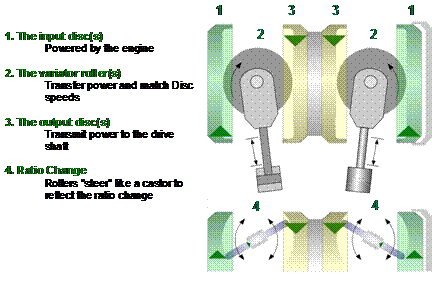
The bus, an Optare Solo 60-seat vehicle, was fitted with a Torotrak IVT transmission and run through the Millbrook London Transport Bus cycle at the Millbrook test facility in Bedfordshire. It is an intensive stop-start cycle, which sounds like it should make the highest demands on any vehicle on the test.
Torotrak seem to think that with a purpose built transmission the gains could be even higher. Optare are, apparently, interested in putting the IVT into production. I would imagine that if the transmission can be incorporated at minimal additional cost the bus operators would be keen on the potential reduction in operating costs.
Wednesday, 22 August 2007
Britain in danger of running dry?
Apparently the number of petrol stations is at its lowest since 1912. With 150 forecourts having closed down already this year there is increasing concern about how difficult it might be to refuel in future.*
The pressures on retailers are understandable. For each pound (sterling not avoirdupois) of fuel sold something like 70-80 pence is tax revenue for the government which doesn't leave much money to cover the cost of the fuel, pay for the infrastructure and staff. No wonder petrol station shops all seem to be turning into mini supermarkets.
Urban petrol stations must also feel the pressure of high demand for land, forcing rents upwards. In the town wher I used to live I know two petrol station sites that are now residential flats.
Is there a solution? Probably not one single solution, more tax relief for petrol stations (especially those that are not associated with supermarkets) would help. Even more important is for us all to think about where we buy fuel. I could fill my car at the supermarket when I do my weekly shop but instead I support the petrol station in my village. It is more expensive but the loss of the only petrol station is more important than a few pounds in my pocket.
*Source: Retail Motor Industry Federation
Monday, 26 March 2007
Taking it easy
According to the government every motorist should do their best to save fuel. They have even issued advice on how to drive in a fuel-saving manner. Some of the advice is good, sensible stuff; check your tyre pressures, don’t carry un-necessary weight, remove your roofrack if you don’t need it and try to plan ahead to avoid heavy braking. Other stuff is just plain nonsense; you expect governments to tell you to stick to the speed limit whether there is a good reason or not. Even stranger was the advice to change up at no more than 2,500 rpm in petrol cars and 2,000 in diesels. How that advice can be considered right or sensible for all cars escapes me.
In the spirit of enquiry I thought I would try and practice my own economy driving technique. Because my car has automatic transmission and an old-fashioned carburettor with a stiff linkage economy is not its forte. The very worst economy I ever had was 18mpg, when the fuel-air mixture was way out. I have seen this improve to 25 and then 30mpg as I’ve had work done to repair the carburettor. It is telling that the government does not remind us to have our cars tuned up regularly – a telling sign that most cars now have engine management systems that never need tuning.
As for economy driving, my aim is to drive economically with the minimum sacrifice in journey time. One of the most effective techniques, I hope, has been trying not to stop wherever possible – a technique that is good for journey times as well as economy. It requires careful observation, planning, timing and nerves of steel. I always err on the side of caution, however, so the economy benefit might not be what it could be.
The result of my careful driving; so far the fuel economy has increased to 31mpg, which hardly seems a worthwhile return for all the effort. It was disappointing because I had expected more; the needle on the fuel gauge was only just past halfway where I would have expected it to be on the ¼ mark. Whether you agree with saving fuel or reducing CO2 emissions there is no doubting the benefit of easing a few more miles out of a tank and, therefore, making the pound in your pocket go further in every sense.
Subscribe to:
Posts (Atom)
