What is the one thing you can take for granted when you sit in the driving seat of just about any car made in the last 100 years? No matter what the pedals do; whether the lever for the gears is on the floor, the steering column or even a series of push-buttons on the dashboard; you can be sure of sitting behind a steering wheel.
Some early cars had tiller steering but a tiller could not always supply the necessary leverage. There was a practical limit to the range of movement available from a tiller which is not present with a wheel. When cars got heavier and tyres grew fatter gearing was used to keep the effort of turning the wheel within reasonable bounds. This had the negative effect that more turns of the wheel were needed so that a driver might not tire of the effort of moving the wheel but the sheer number of turns needed could itself be wearing. Chrysler introduced power assisted steering in 1951 to alleviate the problem but on the whole steering has remained lower geared than is strictly necessary.
It is worth bearing this in mind when reading Sir John Whitmore’s weekend Telegraph column (link above) about steering technique. Sir John contends that many drivers, including advanced police drivers who are supposed to be the best road drivers of all, are taught to steer using an inferior technique. Instead of shuffling the steering wheel, alternately pulling and pushing with both hands he advocates keeping the hands fixed on the steering wheel (usually at “ten to two” or “quarter to three” on the wheel rim). This, he claims, makes for smoother and more natural steering input. He might have a point except that in a lot of cars it is impossible to steer that way for long before you tie your arms in knots.
So why persist in having a wheel at all? We can see that it does nothing to promote control; it does nothing for safety, presenting a considerable hazard in accidents; it obstructs the view of the instruments and the location of ventilation outlets. When badly located she simple fact of holding the arms outstretched to hold a wheel can make a long journey tiring. Far better to have a couple of angled grips either side of the driver’s seat which follow the natural rotation of the wrist. Whether or not he realised it, Sir John has highlighted a fault that afflicts every car whilst passing un-noticed by nearly every driver. It is a matter that ought to demand immediate attention.
Sunday, 7 October 2007


Saturday, 6 October 2007
Picture of the week – Austin Maestro
I know what you’re thinking, how can anyone get excited about an Austin Maestro? Well, Maestros have all but disappeared from British roads; the last ones made by Rover were assembled in 1994 but the Y-prefix on the registration plate of this one means it was registered between March and September 2001.

The date of registration was the first thing I noticed but consider what the letter means. The first Maestros were produced before August 1983 and had Y-suffix registrations. That puts the Maestro in the small group of cars that have had the same letter as both a suffix and prefix.
How did the Maestro come back to Britain? After UK production ceased the entire production line was exported, there was an unsuccessful attempt to sell the tooling to the Bulgarians and eventually production moved to China. Some cars from Bulgaria ended up back in the UK and a company in Ledbury, imported Chinese Maestros and converted them to right-hand drive. This car has a Hereford & Worcestershire registration which, along with the date of registration, suggests that it is a Chinese car.
Friday, 5 October 2007
Peugeot and Citroën go head to head to find silliest van name
Citroën and Peugeot both announced the launch of compact vans. In fact if you look closely they appear to have launched the same van under 2 identities. The Citroën van is the Nemo, which means “no one” in Latin. Whether the intention was association with a character from Jules Verne or Disney Pixar is unclear. Peugeot, not wanting to be outdone, chose an even more bizarre moniker – Bipper. There is a third derivative with a more sensible name – the Fiat Fiorino. All three vans are made in the same factory in Turkey and represent the latest in a long line of commercial vehicles from Fiat and PSA Peugeot Citroën.


Thursday, 4 October 2007
Good news
The Citroën passed its MOT. It needed new brake pads and one of the headlamps needed re-aligning. On the whole it isn’t a bad result for a car that turned 20 this year. It does mean I don’t have the fun of trying to find a new car – maybe next year.
Tuesday, 2 October 2007
More Torotrak News
Another press announcement from Torotrak, this time slightly more relevant to the real world. A bus fitted with a prototype Torotrak IVT transmission demonstrated a 19% improvement in fuel economy compared with the standard 5-speed automatic transmission.
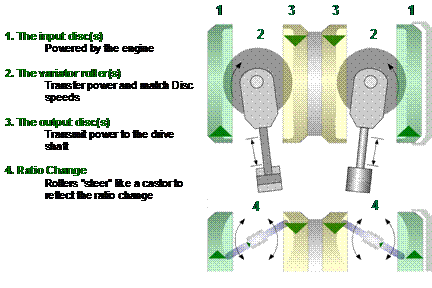
The bus, an Optare Solo 60-seat vehicle, was fitted with a Torotrak IVT transmission and run through the Millbrook London Transport Bus cycle at the Millbrook test facility in Bedfordshire. It is an intensive stop-start cycle, which sounds like it should make the highest demands on any vehicle on the test.
Torotrak seem to think that with a purpose built transmission the gains could be even higher. Optare are, apparently, interested in putting the IVT into production. I would imagine that if the transmission can be incorporated at minimal additional cost the bus operators would be keen on the potential reduction in operating costs.
Monday, 1 October 2007
That sinking feeling
It is time to put my Citroën in for its annual MOT test. For international readers the MOT test is an annual safety inspection that all cars over 3 years old have to pass. It checks the condition of lights, tyres, brakes, safety belts, structural bodywork/chassis and exhaust emissions amongst other things. The older a car gets the more likely it is that something will fail – I try to take care of my car and keep on top of any jobs that need doing but there is only so much you can do.
The difficulty comes when your car fails and you have to weigh up the cost of repair against the cost of replacing the car. It becomes even more fraught when money is tight – would any replacement banger that I buy be any better than the 20-year old Citroën BX I’ve got at the moment?
The difficulty comes when your car fails and you have to weigh up the cost of repair against the cost of replacing the car. It becomes even more fraught when money is tight – would any replacement banger that I buy be any better than the 20-year old Citroën BX I’ve got at the moment?
Saturday, 29 September 2007
Picture of the week: Subaglue Transporter
I like Subaru, they seem to stick to their engineering principles when everyone else is abandoning theirs. Properly balanced, horizontally opposed engines and four wheel drive are Subaru trademarks which the firm has never completely abandoned. For that they should be applauded.

To promote the new Impreza and the road gripping advantages of 4WD Subaru are sending out this transporter. It is a very eye-catching display which will be touring the country, visiting Subaru dealers. What I’d love to know, even more than how they got the cars on the transporter, is how they are going to get the cars off?
To promote the new Impreza and the road gripping advantages of 4WD Subaru are sending out this transporter. It is a very eye-catching display which will be touring the country, visiting Subaru dealers. What I’d love to know, even more than how they got the cars on the transporter, is how they are going to get the cars off?
Subscribe to:
Posts (Atom)
